
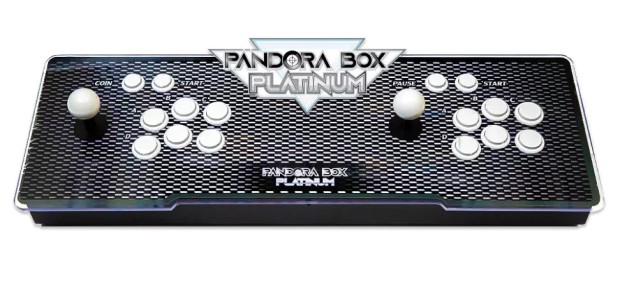
Retro gaming has never been more popular, and the shelves are full of boxes calling themselves a Pandora Game Console. Most of them handle 2D arcade games well enough. Ask them to run a 3D game and things fall apart: the frame rate drops, the sound crackles, the picture tears.
3D is where you find out what a retro box is really made of. This post explains why we think the Pandora Platinum Pro is the best Pandora Game Console for 3D games, and which 3D games you can actually play on it.
Why 3D games are hard for retro boxes
A 2D arcade game from the 80s asks very little of modern hardware. A 3D game from the PlayStation, Dreamcast or Nintendo 64 era is a different animal. The console has to imitate a much more complex machine, in real time, without dropping frames. A cheap board can boot the game. Keeping it smooth for a whole match is the hard part.
That is why so many clone boxes advertise "best 3D games" on the box and then deliver stutter. It is also why we test before we list.
What makes the Pandora Platinum Pro different
Pro hardware
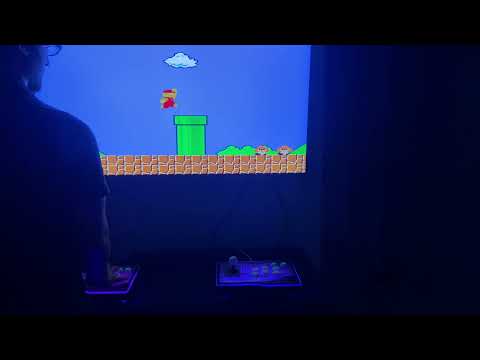
Every Pandora console we sell has the Pro mainboard. We retired the old V1 board because it could not deliver the performance the Pro does, and the Pro supports more emulation. The V1 could only take a limited set of PS1 games. The Pro covers Sega Naomi, Dreamcast, PlayStation 1, PSP and Nintendo 64 on top of the arcade and cartridge-era systems.
Testing, game by game
We do not hand you a menu of everything and wish you luck. Every 3D game on our archive cards has been played on Pro hardware and checked for performance before it went on a list. If a game does not hold up, it does not make the cut.
Smart upscaling
3D games from the late 90s were built for 4:3 tube TVs at low resolution. Stretch them carelessly across a modern 16:9 TV and you get blur and distorted shapes. The Pro board was designed for modern TV sets. Super HD upscaling draws the picture less pixelated and fills the screen, and a couple of menu selections switch back to 4:3 if you want the original proportions. HDMI is the main output, and VGA monitors are supported too.
Separate panels
3D fighters are two-player games at heart, and two players do not always want to sit on top of each other. The standard Single Panel puts both sticks on one board. The Dual Panel gives each player their own controller, joined by a cable. The Wireless Edition removes the cable altogether.
Controls you can set
Many 3D games were made for a controller with more buttons than an arcade panel. The Pro board lets you open the emulator options and set the buttons for each game, then save that layout. If you would rather use a pad for PS1, PSP, N64 or Dreamcast games, the console supports additional controllers, including PlayStation-style pads.
The everyday stuff
- Save states for your progress
- Sanwa upgrades on every panel version
- A Lifetime Mainboard Warranty on the mainboard, power supply, chassis and cords
- US SUPPORT from people who know the hardware
The PlayStation: where home 3D took off
Sony's PlayStation launched in Japan in 1994 and went on to become the first home console to ship more than 100 million units. It had a long life, and Sony did not stop producing it until 2006. A huge share of its library leaned on its 3D graphics, which at the time felt like the future.
It is no surprise that many of the 3D games our customers ask for first are PS1 games. Here are some that play on the Pandora Platinum Pro.
PS1 3D games on our archive cards
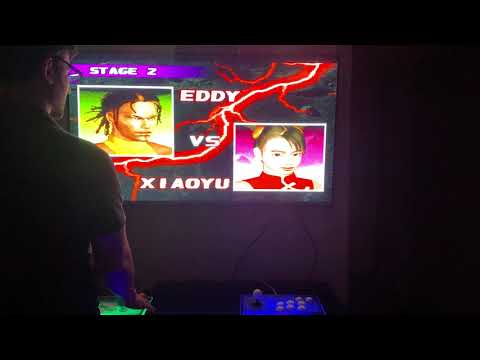
Tekken 3
Namco's Tekken 3 hit arcades in 1997 and the PlayStation a year later, and for many people it is still the best fighting game on the system. It brought in Jin Kazama and Eddy Gordo, and it added the sidestep, which finally let fighters move into the third dimension instead of just walking back and forth. The PS1 version added extras such as Tekken Force mode and Tekken Ball. It plays beautifully on a Sanwa stick.
Soul Blade
Soul Blade is the home version of Namco's Soul Edge, the weapon-based fighter that started the series Soul Calibur grew out of. Every character fights with a blade or a staff, and the PlayStation release added Edge Master mode, a story mode where you collect new weapons as you go.
Bloody Roar 2
The hook is simple and still fun: every fighter can transform into an animal mid-match. Yugo turns into a wolf, Alice into a rabbit, and the fight changes speed the moment someone shifts. Bloody Roar 2 came to the PlayStation in 1999 and both games in the series are on our 3D card.
Rival Schools
Capcom's Rival Schools: United by Fate takes the Street Fighter formula into a Japanese high school and builds it around teams. You pick two fighters, and the team-up attacks between them are the most memorable part of the game. Batsu, Hinata and the rest have a loyal following that still asks for a sequel.
Bushido Blade
Bushido Blade has no health bars. One clean strike can end the fight, and a hit to the leg or arm changes how your fighter moves for the rest of the duel. It is tense in a way no other fighter of the time was, and Bushido Blade 2 is on the card as well.
Ehrgeiz and Street Fighter EX
Ehrgeiz is the oddball of the PS1 fighting library, with arena stages you can run around freely and Cloud and Tifa from Final Fantasy VII as guest fighters. Street Fighter EX went the other way: Street Fighter's 2D gameplay with 3D characters, plus some original fighters who never showed up anywhere else. Both games are on the 3D Fighting Game card.
Crash Team Racing
When the fighting stops, the karts come out. Naughty Dog's Crash Team Racing was the PlayStation's answer to Mario Kart, with power-slides, boost timing and weapons that reward good aim more than luck. It is on the Mario Kart Madness & Friends card next to the PS1 Need for Speed games.
Naomi and Dreamcast: arcade-quality 3D
Sega's NAOMI arcade board and the Dreamcast shared much of the same technology, which is why so many arcade hits came home almost unchanged. The Pro board runs both.
Marvel vs Capcom 2
It is a 2D fighter on 3D stages, but it belongs on this list because it was a NAOMI showcase. Both the NAOMI arcade version and the Dreamcast version play on the Pandora Platinum Pro, and the arcade version is on the Fighting Masters Archive Card.
Power Stone and Power Stone 2
Capcom's Power Stone threw out the idea of two fighters facing each other on a flat stage. You run around a full 3D arena, pick up chairs and bombs, and collect the stones that turn you into a powered-up form. Power Stone 2 raised it to four players and stages that change as you fight. It is one of the best party games of its era.
Soul Calibur
Soul Calibur hit arcades in 1998, and its Dreamcast version a year later was the game people bought the console to show off. The eight-way run lets you circle your opponent freely, and the weapon fighting still feels fast. You will find it on the 3D Fighting Game card.
Dead or Alive 2 and Project Justice
Dead or Alive 2 ran on NAOMI in arcades and moved to the Dreamcast, with tag battles, multi-level stages you can knock opponents off, and a counter-hold system that punishes button mashing. Project Justice is the sequel to Rival Schools, with three-person teams and even bigger team-up attacks. Both are on our cards.
Virtua Fighter 3tb
Virtua Fighter 3tb was Sega AM2's team battle update of Virtua Fighter 3, with stages that have slopes and steps that change how the fight plays. It is a deep, technical fighter and a favorite with players who like to learn a single character properly.
Crazy Taxi and Virtua Tennis
Not everything has to be a fight. Crazy Taxi asks you to pick up a fare, ignore every traffic law and get them there before the clock runs out. Crazy Taxi 2 moves the chaos to a new city and adds the Crazy Hop. Both are on the Mario Kart Madness & Friends card. Virtua Tennis and Virtua Tennis 2, two of the best arcade sports games Sega made, are on our sports card.
PlayStation Portable
PSP games were designed for a small screen, and many of them look surprisingly good scaled up on a TV.
Tekken 6 and Mortal Kombat Unchained
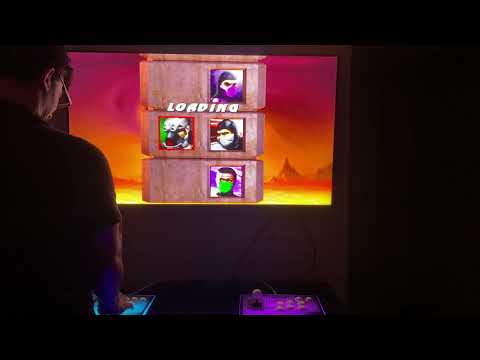
The PSP version of Tekken 6 packs most of the console game into a handheld, and it plays well on an arcade panel. Mortal Kombat Unchained is the portable version of Mortal Kombat: Deception, with extra fighters added. Both are on the 3D Fighting Game card.
Ridge Racer and Wipeout Pure
Ridge Racer was a PSP launch game and it is pure arcade racing: big drifts, loud music, no simulation. Wipeout Pure is anti-gravity racing at silly speeds, and it is still one of the best-looking games on the system.
Burnout and Gran Turismo
Burnout Legends and Burnout Dominator are about crashing your rivals into walls as much as winning. Gran Turismo for PSP goes the other way, with a huge garage of real cars and serious driving. All of them are on the Mario Kart Madness & Friends card, along with Need for Speed Most Wanted and Need for Speed Carbon.
Nintendo 64
Mario Kart 64
Four players, split screen, blue shells. Mario Kart 64 ended more friendships than Monopoly, and it is still the first game people load when the whole family is over.
Super Mario 64
Super Mario 64 showed everyone how movement in 3D should feel, and decades later it still holds up. It sits on the Mario Kart Madness & Friends card with Wave Race 64, the jet-ski racer with water physics that impressed everyone in 1996.
Diddy Kong Racing
Rare's Diddy Kong Racing added hovercraft and planes to the kart formula and wrapped it in an adventure mode. Plenty of people will tell you it is better than Mario Kart 64. We will let you settle that one yourselves.
Mace: The Dark Age and Dark Rift
Two N64 fighters that rarely get a second look. Mace started in arcades with a dark fantasy setting and weapon combat. Dark Rift was one of the first N64 fighters to run at a smooth 60 frames per second. Both are on the 3D Fighting Game card.
More 3D games on our specialty cards
The 3D Fighting Game and Mario Kart cards are the obvious places to start, but 3D games turn up on several other cards too.
Battle Arena Toshinden 1, 2 and 3
Toshinden was one of the first 3D weapon fighters on the PlayStation, and in 1995 it was a big part of why people bought the console. All three games are on the Fighting Masters Vol. 2 card, along with Star Wars: Masters of Teras Kasi, the PS1 fighter where Luke and Han settle things with fists and lightsabers.
Gran Turismo 2
Polyphony's Gran Turismo 2 took the realistic driving of the first game and piled on hundreds of cars and a long career mode. Our sports card carries a modded A-Spec build of it, next to Ridge Racer Reboot.
Tony Hawk's Pro Skater and 1080 Snowboarding
Two-minute runs, a high score to beat, and one more try that turns into twenty. Tony Hawk's Pro Skater is still the skateboarding game everyone remembers. 1080 Snowboarding was Nintendo's N64 answer on the mountain. Both are on the Arcade Sports Games card.
Ready 2 Rumble Boxing
Midway's cartoon boxer was a Dreamcast favorite, with big personalities and bigger punches. Ready 2 Rumble Round 2 is on the sports card as well, along with Virtua Striker 2 for the soccer fans.
Hydro Thunder, Gauntlet Legends and Doom 64
The Midway Arcade & Monsters card has a few 3D surprises. Hydro Thunder is arcade powerboat racing with ridiculous jumps. Gauntlet Legends took the classic four-player dungeon crawl into 3D. Doom 64 is the moody N64 entry in the Doom series that many fans rate as one of the best.
Which archive cards hold these games?
The 3D Fighting Game Archive Card is the main one for 3D fighters: Tekken 2, 3, 5 and 6, Soul Calibur, Soul Blade, Power Stone 1 and 2, Virtua Fighter 3tb, Dead or Alive 1 and 2, Bloody Roar 1 and 2, Bushido Blade 1 and 2 and more.
The Fighting Masters Archive Card adds Marvel vs Capcom 2, Dead or Alive 2 and Tekken 3 to its 2D lineup.
The Mario Kart Madness & Friends Archive Card covers the N64 favorites, the PS1 racers, Crazy Taxi and the PSP racing games.
Every card has its full game list one click away in the console builder. You can see every card we offer on the arcade games list page, and individual games running on the hardware in our retro arcade machines section.
Choosing the right setup for 3D games
If 3D games are the main reason you are buying, here is what we would suggest:
- Pick the Dual Panel if two of you play fighters together. Each player gets their own space.
- Add the Sanwa upgrade. Tekken and Soul Calibur reward precise inputs.
- Put the 3D Fighting Game Archive Card in slot one and the Fighting Masters card in slot two. Between them you have most of the fighting games anyone asks us about.
- Think about a controller pad for the PSP and N64 games that expect analog sticks.
The bottom of the box
Plenty of boxes say they play 3D games. The question is how well, and whether anyone stands behind them when they do not. The Pandora Platinum Pro is tested game by game, backed by a Lifetime Mainboard Warranty, and supported by people in Las Vegas who play these games themselves.
Ready for Tekken 3 on a real stick? Build your console and add the 3D Fighting Game Archive Card in step three.





#pandoraboxplatinum
@pandora_arcade_platinum on Instagram
Our YouTube channel
@pandoraboxarcade on TikTok