
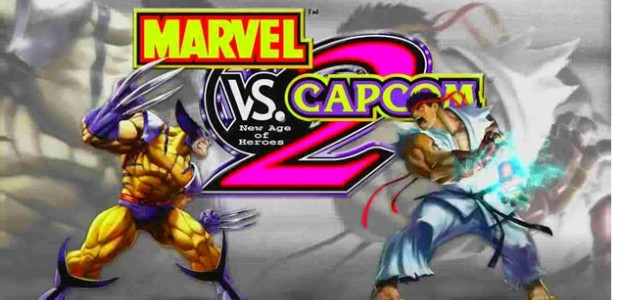
Marvel vs Capcom 2 is one of those games people still argue about at 2 a.m. Which team is best, whether the assists are broken, whether anyone has ever beaten Abyss without getting angry. If you own a Pandora Game Console Platinum Pro, you can have those arguments at home, because the arcade version plays on it.
A quick history
Marvel vs Capcom 2: New Age of Heroes came out in 2000. It is a crossover fighting game from Capcom that puts characters from the Marvel and Capcom universes on the same screen, and it is the fourth game in the Marvel vs Capcom series, following Marvel vs Capcom: Clash of Super Heroes.
It launched in arcades on Sega's NAOMI hardware and was soon ported to home consoles, including the Dreamcast, PlayStation 2, Xbox, PlayStation 3 and Xbox 360. It sold well, critics liked it, and it stayed in fighting game tournaments for years.
What changed from the first game
MvC2 kept the tag-team idea from its predecessor and expanded it into three-on-three battles. It added a new assist system and put 2D fighters on 3D stages in place of the hand-drawn backgrounds. It also brought in the snapback, a move that forces your opponent's active character off the screen and drags in one of their teammates.
How it plays
Each player picks a team of three. Only one character fights at a time, but you can call a teammate in from off-screen for an assist move, and you choose one of three assist types for each character when you pick your team. Characters waiting off-screen slowly recover some of their health, so deciding when to tag out is part of the strategy.
The meter at the bottom fills as you deal and take damage. Once it is full you can spend it on hyper combos, including delayed hyper combos that chain from one character to the next. If the clock runs out, the team with more health left wins.
The game uses a six-button layout: four attack buttons and two assist buttons. That fits an arcade panel naturally, which is one reason it feels so good on the Pandora Game Console.
Game modes
- Arcade mode: beat seven computer-controlled teams to reach Abyss, the final boss, who has three forms
- Versus mode: two players head to head
- Training mode: practice combos and adjust settings such as the Hyper Combo Gauge
- Score Attack: survive against a stream of computer opponents for as long as you can
The roster
The game has 56 playable characters. Three of them were created for this game: Amingo, Ruby Heart and SonSon. In the arcade version, characters unlocked over time. On the home consoles you earned them with points, and the later PlayStation 3 and Xbox 360 releases had everyone unlocked from the start.
Marvel side
Blackheart, Cable, Captain America, Colossus, Cyclops, Doctor Doom, Gambit, Hulk, Iceman, Iron Man, Juggernaut, Magneto, Marrow, Omega Red, Psylocke, Rogue, Sabretooth, Sentinel, Shuma-Gorath, Silver Samurai, Spider-Man, Spiral, Storm, Thanos, Venom, War Machine and two versions of Wolverine.
Capcom side
Akuma, Amingo, Anakaris, B.B. Hood, Cammy, Captain Commando, Charlie, Chun-Li, Dan, Dhalsim, Felicia, Guile, Hayato, Jill Valentine, Jin Saotome, Ken, M. Bison, Mega Man, Morrigan, Roll, Ruby Heart, Ryu, Sakura, Servbot, SonSon, Strider Hiryu, Tron Bonne and Zangief.
How it runs on the Platinum Pro board
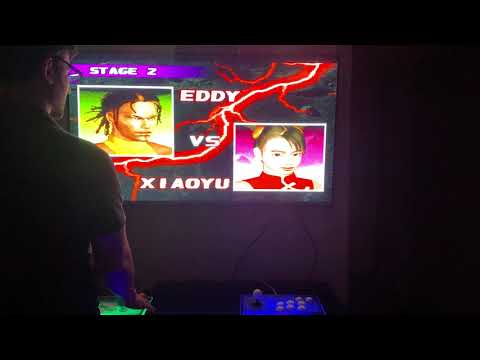
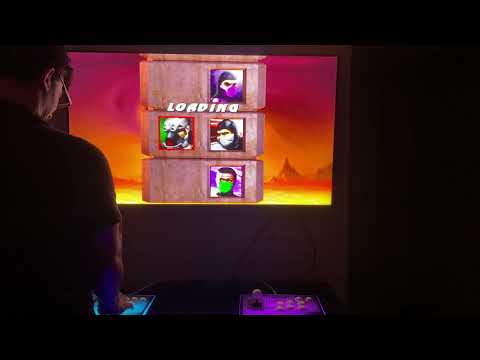
Marvel vs Capcom 2 runs on the Pandora Platinum Pro board, and both versions are playable: the original NAOMI arcade version and the Dreamcast version. The arcade version is on the Fighting Masters Archive Card, alongside Marvel vs Capcom, Street Fighter II, the Alpha series, X-Men vs Street Fighter, Marvel Super Heroes and Capcom vs SNK 2. It also has its own game page in our retro arcade machines section, where you can see it running.
We play it on our own consoles every week, and a few things stand out. The six buttons map cleanly to the panel, and if one is not where you expect, the Pro board lets you remap it and save the setup. Sanwa parts make a real difference here, because assist calls and fast inputs feel sharper on Sanwa buttons. Super HD upscaling keeps the sprites crisp on a big TV, and the menu switches to 4:3 if you want the cabinet look. Save states let you keep your place in arcade mode.
Where MvC2 came from
Capcom spent the second half of the 90s building up to Marvel vs Capcom 2, and several of the games that led there are on the same Fighting Masters card:
- X-Men: Children of the Atom, Capcom's first fighter built on Marvel characters
- Marvel Super Heroes, which added the Infinity Gems
- X-Men vs Street Fighter, the first of the "versus" games and the one that introduced tag-team play
- Marvel Super Heroes vs Street Fighter, which kept the tag formula and added more characters
- Marvel vs Capcom: Clash of Super Heroes, which opened the roster up to Capcom's wider cast and added assist characters
Play them in order and you can watch the ideas behind MvC2 take shape one game at a time.
Setting up MvC2 at home
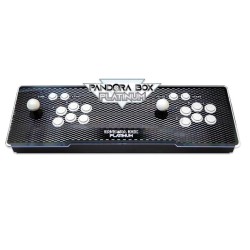
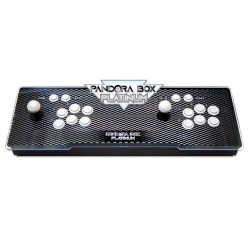
Start with the panel. Two people who play every night will appreciate the Dual Panel, since each player gets their own controller and their own space. Before the first match, check the button layout. Most players like light and heavy punches and kicks on one side and the assists on the other, and if yours is different, remap it once and save it.
Pick the Fighting Masters card as your Card 1, because it carries MvC2 and the whole lineup above. Then decide on the picture: 4:3 for the arcade look, or Super HD filling the screen.
A tournament favorite
MvC2 stayed on the tournament scene for years after its release, long after many newer fighters had come and gone. Players kept coming back for the speed, the huge roster and the sheer number of ways to build a team, and some of the most famous matches in fighting game history were played on it. Set it up at a gathering today and a crowd still forms behind whoever is holding the sticks.
Pass it on
If you have a friend who still claims they were the best Magneto in your neighborhood, now is the time to settle it. When you build your console, choose the Fighting Masters Archive Card as your Card 1 pick and the argument can start the day the box arrives.






#pandoraboxplatinum
@pandora_arcade_platinum on Instagram
Our YouTube channel
@pandoraboxarcade on TikTok